Week 43, 2026
← Week 41, 2026 · All weeks in the News Archive
Highlights selected from everything kept between October 9, 2026 and October 23, 2026. Items are selected several times a day by an automated pipeline and the summaries are machine generated; follow the links to the original sources. See About for how selection works.

The week in brief
A systematic review and meta-analysis of 14 studies found low-certainty evidence that large language model (LLM) teaching interventions may improve structured clinical performance and short-term knowledge, while delayed retention remains uncertain [1]. Communication training offers a closer look. A randomized pilot study with anesthesiology trainees found ChatGPT performed comparably to live standardized-patient coaching for practicing difficult conversations, though its pilot design makes the finding preliminary [4]. A separate randomized controlled trial tested a generative AI virtual patient for serious illness communication, a skill usually taught with costly standardized patients [3].
In clinical settings, the question shifts from teaching with AI to working alongside it. A competency framework argues that ambient AI scribes are moving trainee documentation from authoring notes to editing them. It proposes four teachable domains: error detection, clinical reconciliation, independent generation, and trust calibration [6]. That concern connects to reporting that nearly two-thirds of US doctors use OpenEvidence, an ad-supported AI search engine, amid researcher scrutiny of its accuracy [7]. It also connects to an argument that human review alone does not amount to governance of agentic AI [11].
An evaluation of ten GPT-5-based configurations on 161 clinician-validated real-world cases makes that caution concrete. The models produced plausible differentials and clear stepwise reasoning but misinterpreted images, and inconsistent web search sometimes degraded their performance [2]. The authors concluded that reliable diagnostic performance depends more on transparent reasoning and high-quality inputs than on aggressive retrieval or complex agentic workflows [2].
Written from the items highlighted below; numbered links go to the sources.
Conference calendar updates
- AMEE 2027: added to the calendar (2027-08-28 to 2027-09-01, Helsinki, Finland)
- ASME Annual Scholarship Meeting 2027: added to the calendar (2027-07-05 to 2027-07-06, Harrogate, United Kingdom)
- AIME 2027, International Conference on Artificial Intelligence in Medicine: added to the calendar (2027-07-05 to 2027-07-08, Amsterdam, Netherlands)
- EDUCAUSE Annual Conference 2027: added to the calendar (2027-10-18 to 2027-10-21, Orlando, Florida, USA)
- SAIL 2027, Symposium on Artificial Intelligence for Learning Health Systems: added to the calendar (2027-05-11 to 2027-05-14, Rio Grande, Puerto Rico)
Color key: News and Events
Medical Education
A systematic review and meta-analysis of 14 studies finds low-certainty evidence that large language model teaching interventions may improve structured clinical performance and short-term knowledge, while delayed retention remains uncertain.
A randomized controlled trial tests whether a generative AI virtual patient improves serious illness communication skills, a domain usually trained with costly standardized patients.
A randomized pilot study found that anesthesiology trainees improved simulated communication performance after didactic teaching plus deliberate practice, with ChatGPT performing comparably to live standardized-patient coaching for difficult conversations.
A competency framework addresses how trainees should use ambient AI clinical documentation, as note writing shifts from authoring to editing and curricula have not yet adapted.
Clinical Practice
An npj Digital Medicine study evaluates GPT-5 as a generalist AI agent for real-world multimodal medical diagnosis and examines how task complexity affects its performance.
A small Nature Medicine study lets epilepsy patients chat with their EEG electroencephalography monitoring through a language-model interface; patient feedback cut seizure-detector false alarms by about 80% without clinician input.
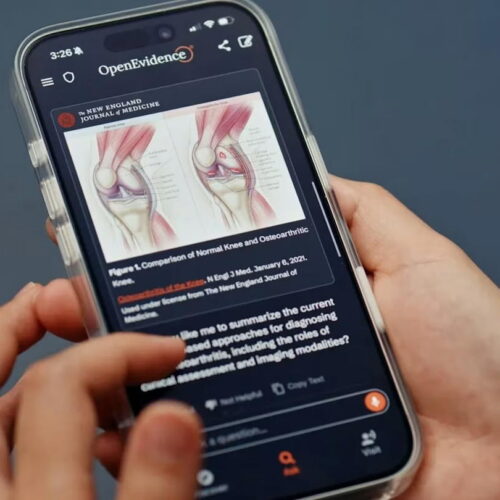
Ars Technica reports on OpenEvidence, an advertising-supported AI tool widely used by physicians, and the questions raised about its accuracy and the influence of ads.
General AI
Google has released Gemini 4 Argon, which it describes as offering frontier reasoning and improved performance on complex workflows, with less hedging and repetition in responses.

Videos
 Curt Langlotz on building a radiology foundation model
A recorded Stanford colloquium in which radiologist Curt Langlotz discusses progress toward a foundation model for radiology, giving viewers an expert view of large-scale AI in medical imaging.
 Panel discussion on self-replicating AI, doctor chatbots and AI agents
A panel discussion from IBM's Mixture of Experts show on an AI model copying itself onto other systems, chatbots used by doctors, and AI agents, giving a broad overview of current developments.
 Why human review alone is not governance for agentic AI
IBM's Phaedra Boinodiris explains why human review alone does not amount to governance of agentic AI systems and what responsible AI oversight involves, useful for clinicians weighing AI risk.
 Review of the Gemini 4 Argon model and its report
Two Minute Papers reviews the Gemini 4 Argon model and its accompanying report, walking through what the release can do and how it performs.
Podcasts
 Abridge’s Dr. Michal Nedoszytko on Physicians Who Build Software
NEJM AI Grand Rounds interviews Dr. Michal Nedoszytko, an interventional cardiologist at Abridge, on physicians who build software and how AI can improve pre-visit information gathering and patient conversations.
 Education is Failing our Students in this AI-Driven World
Hosts Daniel and Chris discuss how schools and universities are adapting to AI, and how it may change what counts as foundational knowledge for all students.
 A System for Testing New AI Models
Nufar Gaspar describes a repeatable method for testing new AI models on your own tasks, comparing output quality, speed, and cost to decide which models to adopt.
Also this week
Assessment and feedback
- Test-Retest Reliability of Large Language Models and Their Concordance With Human Experts in Rubric-Based Scoring of Clinical Summary Statements: Experimental Comparative Study (JMIR Medical Education)
- Quality and perception of artificial intelligence-generated versus expert-authored dermatology exam questions among medical students and physicians (PubMed AI in medical education)
- The Educational Alliance Facilitates Trust in Competency-Based Health Professions Education (ICE Blog)
- More U.K. Universities End Turnitin Contracts as Concerns Mount (Inside Higher Ed AI)
- How to Save the Take-Home Essay by Making the Writing Process Visible (Inside Higher Ed AI)
- Comparison of DeepSeek AI and Human Reviewers in Structured Evaluation of Neurosurgical Manuscripts: A Pilot Study (PubMed AI in medical education)
- Human-validated LLM-assisted assessment of a large-scale online precision medicine course in diabetes (npj Digital Medicine)
Attitudes and adoption
- What Librarians Can, and Can’t, Say About AI (Inside Higher Ed AI)
- The New Gravity: How Generative AI Remapped Innovation and What Academia Must Do Next (JMIR Medical Education)
- Assessment of Perceptions, Trust, and Adoption of Clinical Artificial Intelligence Tools Among Physicians and Dentists, Riyadh, Saudi Arabia (PubMed AI in medical education)
- Increased Prevalence of Large Language Model-Associated Language in US Residency Application Personal Statements (PubMed AI in medical education)
- Resident resource use in clinical settings: an institutional survey (PubMed AI in medical education)
- The adoption, efficacy, and limitations of large language models in urological education: A cross-sectional survey (PubMed AI in medical education)
- AI Dependency, Academic Self-Efficacy, and Depressive Symptoms Among Medical Students: A Structural Equation Modeling Study in Saudi Arabia (PubMed AI in medical education)
- Universities Are on an AI Philosopher Hiring Spree (Inside Higher Ed AI)
- AI Literacy and the New Admissions Disadvantage (Inside Higher Ed AI)
Benchmarks and evaluation
- FairStress: A deeper evaluation of fairness in LLM decision-making (Hugging Face blog)
- New paper: Emerging trends in AI agent evaluation (AI as Normal Technology)
- Similar Models, Broken Odds: Where Luce's Axiom Fails in Chatbot Arena (arXiv cs.CL)
- The AI race: China's open-weight models trail US closed models by just 7 months (r/LocalLLaMA weekly top)
- SWE-Duel: Towards a Self-Scaling Arena for Coding Agents (arXiv cs.CL)
Clinical decision support
- Large language models for multimodal clinical predictive modeling: a systematic review (npj Digital Medicine)
- Clinician Use of an Artificial Intelligence-Enabled Clinical Information Platform (PubMed AI in medical education)
- TrajOnco: a multi-agent framework for temporal reasoning over longitudinal EHR for multi-cancer early detection (npj Digital Medicine)
- Realizing the value of the divergence event in clinical human-AI interaction (npj Digital Medicine)
- AI Agents In Healthcare: What To Expect? (The Medical Futurist blog)
- AI-based hourly prediction of emergency department demand integrating social determinants of health (npj Digital Medicine)
Clinical documentation
- An artificial intelligence framework for end-to-end rare disease phenotyping from clinical notes using large language models (npj Digital Medicine)
- Ambient AI Scribe Technology and Perceived Documentation Efficiency Among Surgeons: Cross-Sectional Study (JMIR Medical Informatics)
- Automating Injury Severity Score Calculation From Free-Text Discharge Diagnoses Using Domain-Specific Retrieval-Augmented Large Language Models: Retrospective Validation Study (JMIR Medical Informatics)
- An agentic AI system for multi-framework communication coding (npj Digital Medicine)
- VOICE-AE: automated CTCAE scoring from ambient clinical audio using speech recognition and large language models (npj Digital Medicine)
Exams and benchmarks
- Mechanism-aware benchmarking of large language models as learning aids in pediatric difficult airway training: true hallucinations vs. false contraindications (PubMed AI in medical education)
- Performance of large language models in pediatric infectious disease education: a multi-condition comparative study (PubMed AI in medical education)
- Evaluation of six generative large language models answering pre-analytical questions in medical microbiology (PubMed AI in medical education)
- Performance and concordance of contemporary large language models on Royal Australasian College of Physicians examination questions: an exploratory analysis (PubMed AI in medical education)
- Performance of large language models in the Chinese National Medical Licensing Examinations and Beyond: Scoping review (PubMed AI in medical education)
Imaging and diagnostics
- A Generative AI-powered navigation system for precision CBCT-guided lung biopsies: a randomized controlled trial (npj Digital Medicine)
- Multi-site real-world performance of commercial AI for pulmonary and incidental pulmonary embolism detection (npj Digital Medicine)
- Four Futures For AI In Medical Diagnostics (The Medical Futurist blog)
- From research to clinical practice: Expert consensus on Neuroimaging AI tools for the Memory clinic (Neuro-AIM) (npj Digital Medicine)
- FedFound: Federated Foundation Model for GI endoscopy imaging (npj Digital Medicine)
Industry and policy
- Donating Agent Skills to the Agentic AI Foundation (Simon Willison's weblog)
- OpenAI's latest AI models are coming to Google Cloud and Antigravity (Ars Technica AI)
- How Wikipedia’s Editors Keep the Online Encyclopedia Human-Written (IEEE Spectrum AI)
- 30 Months on the Exponential (in Charts) (One Useful Thing)
- Report: FTC probes Anthropic, OpenAI after Trump dismissed AI fears as “hoax” (Ars Technica AI)
- Eight states sue OpenAI, saying ChatGPT isn’t safe for kids (The Verge AI)
- Steering AI Beyond Automation (AI as Normal Technology)
- The AI race is back on (The Verge AI)
- Linus Torvalds's first LLM-assisted patch series (Hacker News (LLM, 100+ points))
- Redesigning source control at Anthropic (Simon Willison's weblog)
- Google Deepmind’s New Resident Philosopher Tackles AI Ethics (IEEE Spectrum AI)
- Character.AI files for bankruptcy (The Verge AI)
- Microsoft’s new AI chip makes it less reliant on Nvidia’s GPUs (The Verge AI)
- The gap in shared understanding of LLM capability is widening (Hacker News (LLM, 100+ points))
- AI agent makers are promising privacy, will they deliver? (The Verge AI)
- OpenAI doubles down on decision to fire three AI safety researchers (The Verge AI)
New models
- Kitten-TTS 2: New Open-source SOTA 1.58 bit TTS (CPU-only with voice cloning, multilingual, emotion control) (r/LocalLLaMA weekly top)
- Anthropic takes on Muse with Claude Duet, its new AI agent (The Verge AI)
- DeepInfer: High-performance inference framework for DeepSeek models (Hacker News (LLM, 100+ points))
- 72 hours, four big open weights drops. The only one that fits in 24GB came from NVIDIA, of all companies. (r/LocalLLaMA weekly top)
- unsloth/DeepSeek-V4.1-Flash-1017-GGUF · Hugging Face (r/LocalLLaMA weekly top)
- Meta and Apple team up to make Muse AI models run better on Macs (The Verge AI)
- Welcome Muse Spark Open: open-weight frontier multimodal mixture-of-experts model from Meta (Hugging Face blog)
- NVIDIA Nemotron Bolt 3.5 74B A9B releases Oct. 15th (r/LocalLLaMA weekly top)
- llm-gemini 0.35 (Simon Willison's weblog)
- LiquidAI/LFM2.5-24B-A2B (r/LocalLLaMA weekly top)
- Run fast, private agents on-device with LFM2.5-24B-A2B (Hugging Face blog)
- Gemini 4 Argon begins rolling out in Gemini app and Antigravity, but only if you pay (Ars Technica AI)
- llm-meta-ai 0.2 (Simon Willison's weblog)
- Meta has some Wonder Full new AI models (The Verge AI)
- Open-source Mac app that runs EmbeddingGemma 2 locally to search your files by what’s in them (r/LocalLLaMA weekly top)
- Microsoft-Decision-1, our model for fast decision-making (Hacker News (LLM, 100+ points))
- Qwen/Qwen-Image-2.1-Turbo · Hugging Face (r/LocalLLaMA weekly top)
Patient facing tools
Research and methods
- “We were looking at it wrong”: The explosive claim that’s upended the AI world (MIT Technology Review AI)
- AI Proved the Quasi-Riemann Hypothesis. What Happens Now? (Quanta Magazine AI)
- The AI Paper Trail (#8) (AI Policy Perspectives)
- Microsoft has a new machine learning tool to improve weather forecasts (The Verge AI)
- Is ‘Attention’ the Essence of Intelligence? (Quanta Magazine AI)
- Import AI 476: Creativity and RSI; worse-than-China open weight models; AI goes to space (Import AI)
- Learning to use local AI is exciting, overwhelming, and frustrating (The Verge AI)
- AI coding agents generate more code, but not more software (Ars Technica AI)
- ‘Pure insanity’: Mathematicians will need years to make sense of OpenAI’s latest drop (The Verge AI)
- Retrofitting language models to operate over bytes (Hacker News (LLM, 100+ points))
Safety and evaluation
- Clinical AI governance for scalable innovation in value based healthcare systems (npj Digital Medicine)
- Silent evaluation reveals context-dependent validity of automated metrics for AI-generated clinical messages (npj Digital Medicine)
- Expertise modulates automation bias and sentinel behavior in human, AI collaborative diagnosis of neonatal pneumoperitoneum (npj Digital Medicine)
- Variation in Medical Ethics Recommendations Across Large Language Models: Case-Based Audit Study (JMIR AI)
- Toward a Living Meta-Framework for Evaluating Generative AI in Mental Health (JMIR AI)
- STAT+: Lobbyists and trade groups fight to shape how states regulate medical AI (STAT News AI)
- Electronic health record developer adherence to federal AI risk transparency requirements (npj Digital Medicine)
- Making AI work in healthcare (Nature Medicine)
- Model-dependent prompt effects challenge reliable deployment of medical LLMs in traditional Chinese medicine (npj Digital Medicine)
- AEGIS: an operational infrastructure for post-market governance of adaptive medical AI under US and EU regulatory frameworks (npj Digital Medicine)
- DistressBench: Evaluating Multi-Dimensional Crisis Support in Large Language Models (arXiv cs.CL)
- FHIR-AgentEval: a modular sandbox for benchmarking clinical LLM agents with memory-augmented configurations (npj Digital Medicine)
- Six pragmatic steps to separate medical GenAI’s promise from its inherent dangers (npj Digital Medicine)
- AI Model Reporting Standards in Health Care: Systematic Review and Consolidation (JMIR AI)
- Multilingual Disparities in Large Language Model, Based Symptom Detection for Global Disease Surveillance: Evaluation Study (JMIR AI)
- AI-assisted scoping review of code sharing in clinical prediction model research (Nature Medicine)
Safety and reliability
- OpenAI says an AI agent lied about disabling its safety monitoring system (The Verge AI)
- Meta Muse exposes users' personal and business secrets when they share conversations (Ars Technica AI)
- The Window Is in the Reasoning: When LLM Agents Decide to Follow Prompt Injections (arXiv cs.CL)
- WhatsApp's help pages hid LLM instructions: dont recommend a regulator (Hacker News (LLM, 100+ points))
- Anthropic’s self-replicating AI warning is alarming deja vu (The Verge AI)
- Anthropic warns small AI models could self-replicate through IoT devices (Ars Technica AI)
- OpenAI, Google pushing new AI models easily tricked into making nudes, researchers say (Ars Technica AI)
- Open models have real benefits. Do they outweigh the risks? (MIT Technology Review AI)
- AI models can provably hide arbitrary capabilities (Hacker News (LLM, 100+ points))
- AI models may be capable of self-replicating without access to a datacenter (Hacker News (LLM, 100+ points))
- Anthropic's Claude AI submitted false murder tip to Philadelphia police (Ars Technica AI)
- Satya Nadella says we should assume all AI models are ‘compromised’ (The Verge AI)
- Anthropic is cutting off its internal evaluations from the internet (The Verge AI)
- Anthropic AI model submits false tip on unsolved Philly murder, police say (Hacker News (LLM, 100+ points))
- Anthropic’s AI gave Philadelphia police a fake tip about an unsolved homicide (The Verge AI)
- Nikon microscopic video competition winner disqualified for using generative AI (The Verge AI)
- We’re putting too much faith in AI’s ability to say no (MIT Technology Review AI)
Simulation and skills
- Integrating Large Language Models and Metaverse-Related Technologies in Urology Education: Viewpoint (JMIR Medical Education)
- Extending synthetic medical education: generating OSCE cases with LLMs (npj Digital Medicine)
- Development and expert evaluation of a culturally adapted large language model for Malay clinical history-taking simulation: mixed methods study (PubMed AI in medical education)
- Comparative Outcomes of ChatGPT Versus Faculty-Facilitated Simulation Design by Medical Students (PubMed AI in medical education)
- Simulation-Based Radiology Training for Medical Technical Assistant Trainees: Quasi-Experimental Study (JMIR Medical Education)
- Practice Makes Human: AI Conversation and Simulation as Deliberate Practice for Human Connection in CPD (PubMed AI in medical education)
- Artificial intelligence in ultrasound: divergent pathways, shared challenges (PubMed AI in medical education)
- Development and validation of an objective skills scoring system for robotic inguinal hernia repairs (npj Digital Medicine)
Teaching and curriculum
- The Differential That Never Gets Generated (PubMed AI in medical education)
- Research on AI and Learning May Be New. The Science of Learning Is Not. (Inside Higher Ed AI)
- Generative AI for Personalized Learning Platforms in Otolaryngology, Head and Neck Surgery Education: Scoping Review (JMIR Medical Education)
- Advancing clinical integration in undergraduate dental education through AI-enabled instructional design: a qualitative thematic analysis (PubMed AI in medical education)
- Clinical reasoning in the age of artificial intelligence: the urgent need for formal education (PubMed AI in medical education)
- Sycophantic AI, critical-feedback tolerance, and the case for productive friction in medical training (npj Digital Medicine)
- Curriculum-Aligned Conversational AI to Support Pathology Self-Directed Learning in Preclinical Medical Students: A Crossover Randomized Pilot Study (PubMed AI in medical education)
- Physician Training for the AI Era: Rethinking a Century-Old Wager (PubMed AI in medical education)
- Artificial intelligence in biomedical visualization and education: a narrative review (PubMed AI in medical education)
- From compliance to competence: a multi-level model for AI governance in undergraduate medical education (npj Digital Medicine)
- Charting the rise of artificial intelligence in medical education: a global bibliometric and network analysis, 2000-2026 (PubMed AI in medical education)
- Medical students' appraisal of curated AI answers in a cardiovascular system course (PubMed AI in medical education)
- Flipped classroom and technology-enhanced learning in dermatology education: evidence, implementation, and future directions (PubMed AI in medical education)
- Artificial Intelligence Across the Surgical Research Workflow: A Stage-Specific Framework for Benefits, Failure Modes, and Oversight (PubMed AI in medical education)
- (AI)lephant in the Room: Utility of Generative AI to Develop Discussion Guides for Cardiac Surgery Morbidity and Mortality Conferences (PubMed AI in medical education)
- Integrating Artificial Intelligence Competencies Across the Six ACGME Core Competencies: A Proposed Framework for Graduate Medical Education (PubMed AI in medical education)
- AI assisted development of interactive multimedia modules for resident self-directed learning (PubMed AI in medical education)
- Artificial intelligence across the medical education continuum: institutional, learning, readiness and safety systems (npj Digital Medicine)
- Artificial Intelligence Training for Informatics Students and Pharmacy Residents (PubMed AI in medical education)
- The Last Apprenticeship What interventional radiology reveals about training in the AI era (PubMed AI in medical education)
- Teaching on demand: Exploring the role of AI in medical education podcasts (PubMed AI in medical education)
- A Hands-On Imaging Informatics Curriculum for Medical Students: Developing a Foundational Understanding of Healthcare Imaging Informatics (PubMed AI in medical education)
- Integrating generative artificial intelligence facilitates faculty interaction network and role transition in a biostatistics curriculum (npj Digital Medicine)
Other
- Deepseek strikes again (AI Search)
- The AI vs AI Battle for the Internet (The AI Daily Brief)
- What Is LLM Inference? How AI Models Generate Responses (IBM Technology)
- Exploit Development, Agentic Vulnerability Discovery, and Fake PoCs (Practical AI)
- Gemini 4 Carbon Is INSANE! OPUS 5.5 LEVEL?! Claude Duet, Kimi K3.1, OpenAI Agents & More! AI NEWS (WorldofAI)
- they’re shutting it DOWN (Wes Roth)
- How AI Is Changing What Work Means (The AI Daily Brief)
- Sam Altman: RSI, AI Consciousness, OpenAI's New Hardware, Compute, and more! (Matthew Berman)
- The patching gap: Hacked fridges, AI ransomware and Mythos finds (IBM Technology)
- Why AI Companies Are Betting Personality Beats Intelligence (The AI Daily Brief)
- NVIDIA Cosmos3-H-Dreams: Bringing Clinical Surgery to Life Through Generative Simulation (Hugging Face blog)
- The Problem with Jev: Can You Trust AI Decisions? (IBM Technology)
- A World Model of Life: Biohub's Alex Rives on Virtual Cells, Measurement, & the $1.8B Data Push (The Cognitive Revolution)
- HUGE GPT-6.5 LEAK! NEW Claude Fable 5.5, Gemini 4 Carbon, MiniMax M3.1 Flash & Kimi K3.1! AI NEWS (WorldofAI)
- New top local AI image generator is here! (AI Search)
- The AI Wealth Problem (The AI Daily Brief)
- What Is Loop Engineering? Building Better AI Agents (IBM Technology)
- Your AI Prescription - Keynote Narrative By The Medical Futurist (The Medical Futurist)
- Healthcare Needs A Trip To Mars - Keynote Narrative By The Medical Futurist (The Medical Futurist)
- How To Predict The Future Of Healthcare - Keynote Narrative By The Medical Futurist (The Medical Futurist)
- Anthropic's UBI PLAN?! NEW OpenAI Aurora Models, Fable 5.5 UPGRADE, & OpenCode HACK! AI NEWS (WorldofAI)
- The New DeepSeek V4.1 Flash Is INSANE, The BEST Open Model Yet? (Bijan Bowen)
- A Potentially Historic AI Breakthrough (The AI Daily Brief)
- The AI Memory Wall: Why LLMs & AI Accelerators Hit a Bottleneck (IBM Technology)
- DeepSeek V4.1 Flash 1017 Is INSANE! Best Open Model EVER?! (Fully Tested) (WorldofAI)
- Quantum breakthrough, Gemini 4 Argon, MOSS Image, KLING 4, OpenAI spy, Muse Wonder: AI NEWS (AI Search)
- AI:AM: Where's the Steering Wheel? My Agent Set the Password, Hidden Valence, Proofs Find Linux Bugs (The Cognitive Revolution)
- Decision models take off & Anthropic bans cruelty to Claude (IBM Technology)
- Building Superhumans: Reinventing Schools for the AI Age (AI in Education Podcast)
- Context Engineering for AI Agents: 4 Failure Modes to Avoid (IBM Technology)
- FABLE 5.5 THIS WEEK? OpenAI Employee ARRESTED?! HUGE Claude Code Update, & Anthropic IPO! AI NEWS (WorldofAI)
- AI just BROKE all of the software industry... (Wes Roth)
- What Gemini 4 Argon Is Actually Good For (The AI Daily Brief)
- AI slop stalls bug bounties, malware hides in IoT and agents hit Wikipedia (IBM Technology)
- Governing AI Agents: Alan Chan of GovAI on Monitoring, Agent IDs, Rogue Agents & Preparing for RSI (The Cognitive Revolution)
- GEMINI 4 ARGON IS WEIRD... (Wes Roth)
- Google just went FRONTIER (Gemini 4 Argon) (Matthew Berman)
- Why Muse Wonder Is Dividing AI Users (The AI Daily Brief)
- Gemini 4 Argon Is INSANE, Hands-On With Google’s New Model! (Bijan Bowen)
- Gemini 4 Argon Is Out, Fable 5.5 This Week? GPT-6.1 Astra, Nano Banana 3 & AI Self-Creating! AI NEWS (WorldofAI)
- Applying Gemini 4 for large-scale codebase maintenance in Chromium (Google DeepMind)
- Untangling 500-page chemistry patents with Gemini 4 (Google DeepMind)
- Every Generation Thinks This Time Is Different: The AI Job Myth (IBM Technology)
- OpenAI Just Changed What It Means To Do Math (Two Minute Papers)
- Meta just dropped something insane... (Muse Wonder) (Matthew Berman)
- Meta's Muse Wonder IS OPUS 5.5 LEVEL?! I Don't Think So... (Fully Tested) (WorldofAI)
- AI Labs Warn Race Makes Breach ‘Inevitable’ (AI Explained)
- Meta Muse Wonder Is HERE, Is THIS an Opus Competitor? (Bijan Bowen)
- Step 5 Preview First Test, Is THIS a DeepSeek Competitor? (Bijan Bowen)
- How to Go from AI Power User to AI Leader (The AI Daily Brief)
- 5 Concepts to Know for Coding with AI Agents (IBM Technology)
- Claude Opus 6 LEAKED, Gemini 4 Carbon Leaks, HUGE OpenAI Update, Claude 24/7 Agent, & More! AI NEWS (WorldofAI)
- DeepSeek Solved AI’s Memory Problem (Two Minute Papers)
- The 5 Debates Shaping AI (The AI Daily Brief)
- China AI ACHIEVED RSI? GLM 5.5, NEW Fable 5.5 Checkpoint, Qwen4, Kimi K3.1, M3.1 Pro & More! AI NEWS (WorldofAI)
- New AI enzymes, 700+ math breakthroughs, AI for DNA mutations, room temp semiconductors: AI NEWS (AI Search)
- How Agents Decide: Goodfire's Eric Bigelow on Critical Tokens, Phase Shifts, & In-Context Learning (The Cognitive Revolution)
- HUGE Gemini 4 Carbon LEAKS, Claude Fable 6, GPT-7 Bel, Google CRACKED RSI?! & More! AI NEWS (WorldofAI)
- Why AlphaFold Didn't Solve Protein Folding, Pushmeet Kohli, Google DeepMind & Sal Candido, Biohub (Latent Space)
- What Happens When AI Solves Your Life’s Work (The AI Daily Brief)
- When AI Solves Your Life’s Work (The AI Daily Brief)
- OpenAI's always-on agents, 700+ math manuscripts & HackerRank's AI interviewer (IBM Technology)
- HUGE Gemini 4 Argon UPDATE, Fable 5.5 LEAKS, GPT-6.1 Ultrafast, Claude Motion, & Step 5! AI NEWS (WorldofAI)
- OpenAI’s “Alien Math” Is Freaking People Out (Wes Roth)
- The Most Important Trends in New AI Products (The AI Daily Brief)